

Sales On NOW... Don't Miss Out on Our Best Deals on Health!
🖤 Buying through our links helps support our app at no extra cost to you 🖤

The Truth Behind the 10,000 Steps Goal: Unveiling the Origins and Scientific Perspective
How a TV Show Highlights the Popularity of the 10,000 Steps Challenge
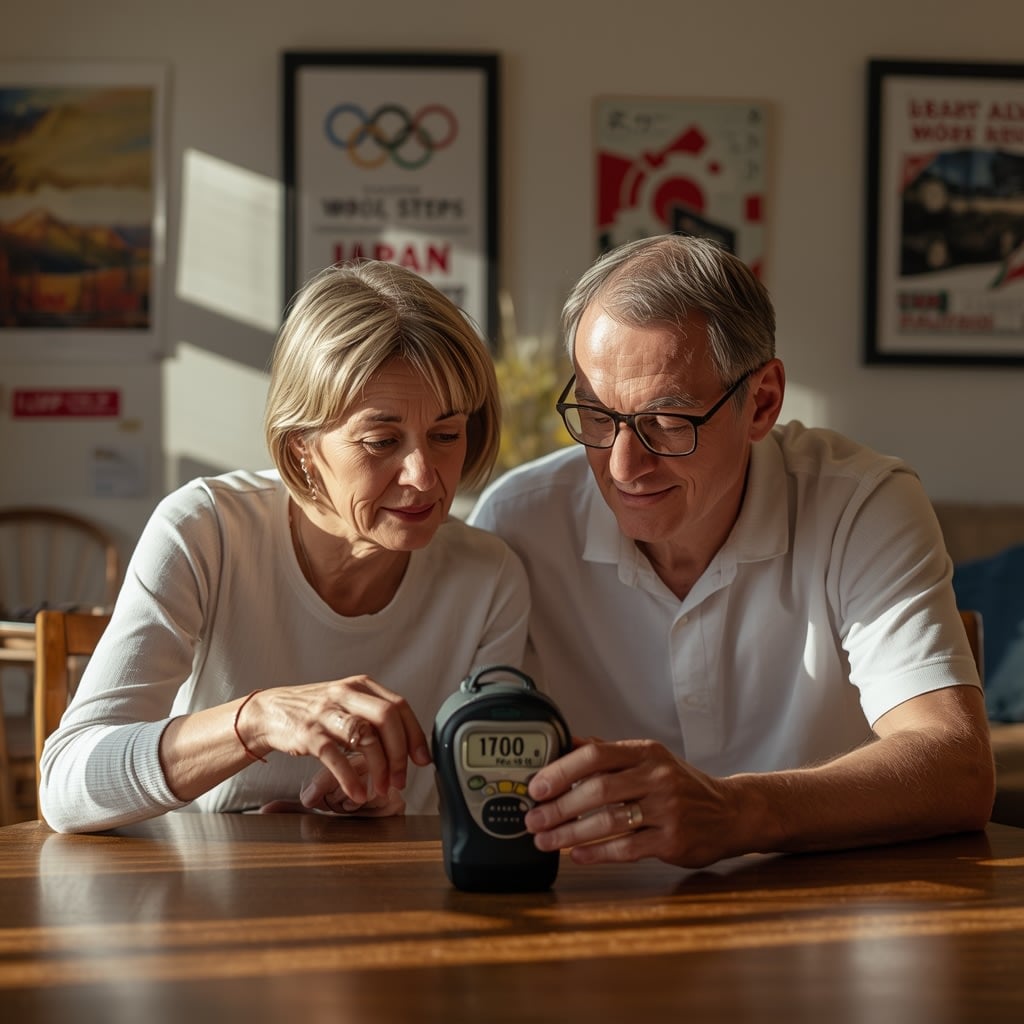
You might have caught a moment in a TV show where two friends compete to reach 10,000 steps on a treadmill. This kind of scene perfectly captures how the idea of hitting 10,000 steps a day has woven itself into everyday conversations, fitness routines, and even friendly competitions among pals.
Though it might seem like a modern health obsession, this step-count goal has actually been around for quite a while. It’s become so deeply rooted in our average lifestyle that many of us accept it without questioning where this figure originally came from or if it truly reflects the best approach to staying healthy.


Sales On NOW... Don't Miss Out on Our Best Deals on Health!
Grab These Deals on Digital Pedometer Before They're Gone!
🖤 Buying through our links helps support our app at no extra cost to you 🖤

The Surprising Origin Story: How Japan's Fitness Innovation Sparked a Global Phenomenon
The story begins in the 1960s in Japan when the country was bustling with preparations to host the Summer Olympics. A concerned doctor noticed that while athletes were training hard, the general population’s activity was decreasing due to convenience-driven lifestyles like increasing car use. This shift worried him as everyday physical activity seemed to be dwindling.
Collaborating with an engineer, he helped create a device called the Manpo-Kei, which means '10,000 step meter' in Japanese. This device was one of the first pedometers designed to help people track their steps as a way to promote daily movement and better health. Interestingly, pedometers themselves have a much older history, dating back centuries as tools to measure travel distance, with origins attributed to figures like Leonardo da Vinci and even Thomas Jefferson.
But why 10,000 steps? Nobody remembers exactly why this number was chosen. Some speculate it might have been inspired by the Japanese character for 10,000, which looks somewhat like a person walking or running, but there's no definite proof. It might have also been chosen because it’s an easy-to-remember, ambitious target that clearly separates inactive from active lifestyles.
Sales On NOW... Don't Miss Out on Our Best Deals on Health!
Grab These Deals on Fitness Tracker Watch Before They're Gone!
🖤 Buying through our links helps support our app at no extra cost to you 🖤
Follow Us
Help our community grow by following us on social media

From Marketing Gimmick to Health Guideline: The Evolution of the 10,000 Steps Goal
The genius of the 10,000 steps figure lies in its marketing power. Much like memorable advertising slogans that transformed entire industries, this catchy goal helped kickstart the mass appeal of everyday fitness and birthed the wearable fitness tracking trend that we see today.
It was only in the late 1970s that science began to weigh in on the health benefits of this goal. A researcher keen on connecting calorie burn to step counts conducted studies using pedometers and volunteers, finding that approximately 10,000 steps correspond to a cardio-protective level of calorie expenditure. His work helped validate the number from a scientific viewpoint, even though the idea itself started as more of a practical and motivational target than a precise scientific prescription.
In the following decades, pedometer technology improved, expanding research and public awareness globally. Eventually, public health campaigns adopted the step count as a simple, actionable message to encourage physical activity among adults.
Sales On NOW... Don't Miss Out on Our Best Deals on Health!
Grab These Deals on Smartphone Step Counting App Before They're Gone!
🖤 Buying through our links helps support our app at no extra cost to you 🖤
Stay Updated with Women's Spot Insights
Get the latest women's health tips, wellness advice, and expert insights delivered directly to your inbox.
We respect your privacy. Unsubscribe at any time.
Rethinking the Magic Number: What Science Says About Your Personal Step Goal
In recent times, more researchers have started to question whether the 10,000 steps target fits everyone perfectly. After all, a 30-year-old aiming to improve fitness might have very different needs than a 70-year-old seeking general health maintenance.
Studies show that for older adults, taking around 4,400 to 7,500 steps a day can significantly lower the risk of mortality, indicating that benefits don’t require hitting the 10,000-step mark exactly. Meanwhile, younger people might benefit more from slightly higher step counts. This suggests that your personal step goal might be better set based on your age, health status, and fitness goals rather than adhering rigidly to a universal number.
Moreover, the intensity of walking is another factor under investigation. While some scientists argue that walking faster or incorporating more vigorous steps might boost benefits, others point out that any movement is valuable. For individuals managing conditions like blood pressure, diabetes, or mental health challenges, the pace and quality of steps may also influence outcomes differently than for mortality risk alone.
Emerging research is still catching up with the potential variety of step goals suited to different lifestyles, and as more data becomes available, expect guidelines to become more personalized.
What remains clear, no matter what number you aim for, is the importance of staying active in a way that fits your motivation and lifestyle. Whether you reach 6,000, 8,000, or the classic 10,000 steps, moving more can be a powerful tool for better health and well-being.
Sales On NOW... Don't Miss Out on Our Best Deals on Health!
Grab These Deals on Walking Shoes Before They're Gone!
🖤 Buying through our links helps support our app at no extra cost to you 🖤
Comments
No comments yet. Be the first to share your thoughts!
Selected articles just for you
Discover more articles in this category that might interest you

Sales On NOW... Don't Miss Out on Our Best Deals!
🖤 Buying through our links helps support our app at no extra cost to you 🖤